Free Ordinance Summarizer
Transform complex municipal ordinances and resolutions into plain language summaries. Understand local laws, city codes, zoning regulations, and government rules easily. Perfect for citizens, business owners, real estate professionals, and journalists.
Our free ordinance summarizer transforms complex municipal codes, city ordinances, and government resolutions into easy-to-understand summaries. Whether you're trying to understand zoning ordinances, noise regulations, business licensing requirements, or building codes, our AI tool explains local laws in plain language that anyone can understand.
Paste the full text of the ordinance or resolution you want summarized. Include all sections for the most complete summary.
How to Understand Any Municipal Ordinance
- Paste the ordinance text - copy the full ordinance or resolution from your city's municipal code
- Select the summary type - citizen-friendly for easy understanding, legal brief for professionals, or executive summary for decision-makers
- Choose the detail level - brief for quick overview, standard for balanced detail, or comprehensive for full analysis
- Generate your summary - our AI translates the legal language into plain English
- Understand your local laws - know what the ordinance requires, prohibits, and how it affects you
Frequently Asked Questions About Municipal Ordinances
What is a municipal ordinance?
A municipal ordinance is a law enacted by a local government (city, town, village, or county) to regulate matters within its jurisdiction. Ordinances have the force of law and cover topics like zoning, noise regulations, parking, business licensing, building codes, and public safety. They remain in effect until amended or repealed by the governing body.
What is the difference between an ordinance and a resolution?
Ordinances are local laws with the force of law that remain in effect until repealed. Resolutions are typically administrative decisions or policy statements (like approving a contract, recognizing someone, or expressing the body's position) that don't create permanent law. Ordinances usually require multiple readings; resolutions often pass with a single vote.
Can I rely on this summary instead of reading the full ordinance?
This summary is for informational purposes to help you understand the ordinance's key provisions. For legal compliance, business decisions, or official purposes, always refer to the official enacted ordinance text. When in doubt, consult with the appropriate government office, city attorney, or your own legal counsel.
Where can I find my city's municipal ordinances?
Most cities publish their municipal code online through platforms like Municode, American Legal Publishing, or their own official websites. You can also request copies from your city clerk's office, local library, or visit city hall. Many states require municipalities to make their codes publicly available.
How often are municipal codes updated?
Municipal codes are updated whenever the governing body passes new ordinances or amendments. Active cities may pass dozens of ordinances annually. Online municipal codes are typically updated within 30-90 days of adoption. Always check the effective date and last update date when reviewing ordinances.
Related Tools
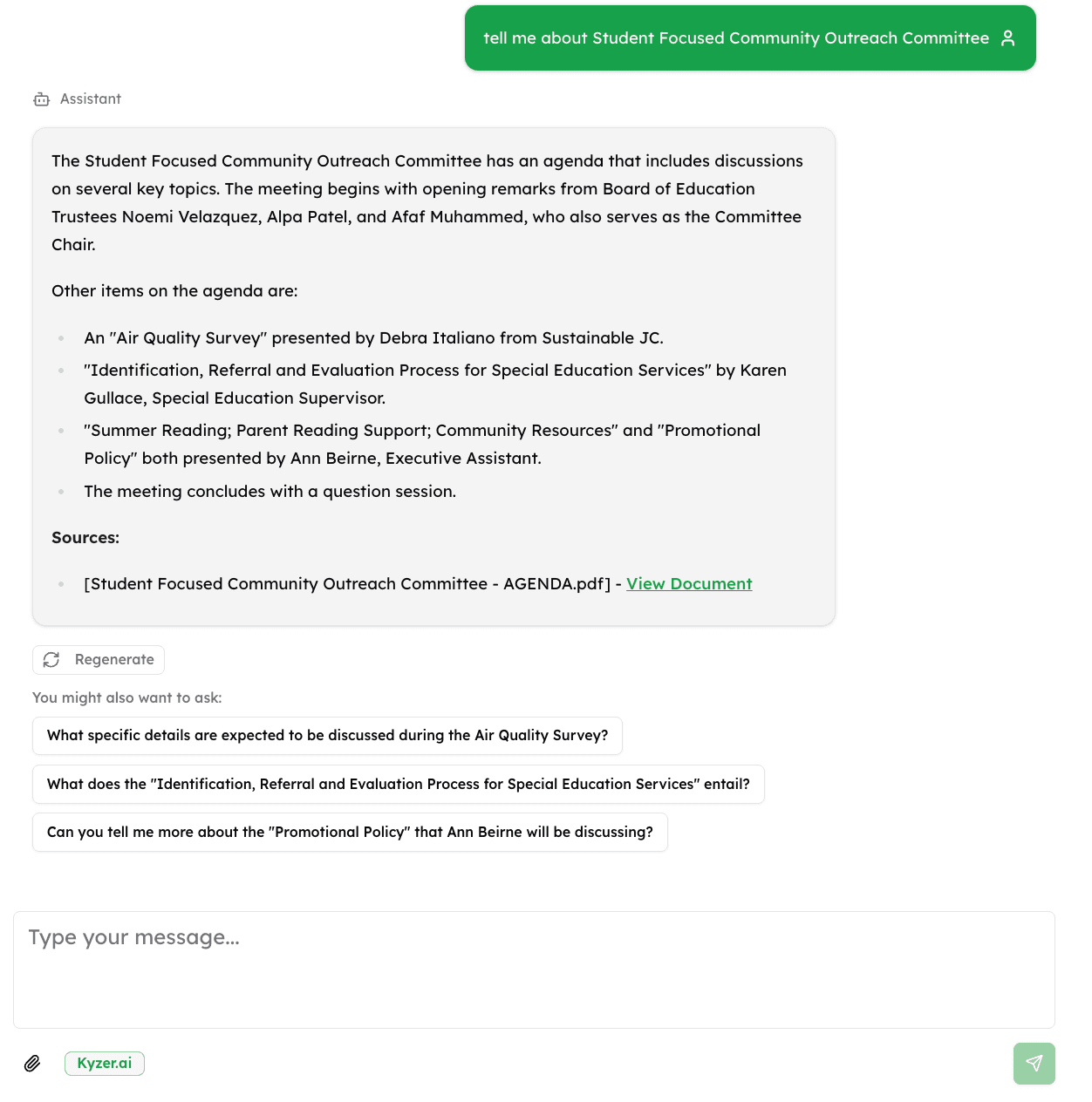
Build a public-facing AI agent for your citizens
- Embed a chatbot on your website that answers from official documents
- Upload ordinances, agendas, and minutes to one searchable archive
- Citizens get instant answers with citations to source documents